The Question People Ask Once They See the Tools
When people find out I check Torah scrolls, mezuzahs, and tefilin for a living, they usually want to know one thing: what am I actually looking for? They picture me reading the whole thing straight through, like checking a book for typos. That is not how it works, and I want to walk through what the process really looks like.
Why a Letter Can Be Wrong Without Looking Wrong
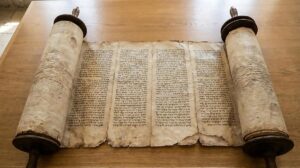
A Torah scroll, a mezuzah scroll, and the parchments inside tefilin are all written by hand, with a quill, using specific forms for every letter. Hebrew has letters that look almost identical unless you know exactly where the ink should sit. A Vav and a Yud are separated by length. A Resh and a Dalet are separated by a corner. Over years, the ink can crack, flake, or fade in ways that pull a letter across that line without anyone noticing.
So the first thing I am doing is not reading the words. I am looking at the shape of each letter and asking whether it still matches the form it has to have to be considered valid. That is a different kind of attention than reading. Reading fills in gaps for you. Checking cannot let it.
The Parts People Forget to Check
Most people assume the danger spots are wherever the scroll gets the most wear, like the outer edges or the parts that get rolled and unrolled the most. Sometimes that is right. But some of the most common problems I find are in places nobody thinks to worry about:
- Letters that touch each other when they are supposed to have a clear space between them
- Letters that have lost enough ink to break their outline, even if you can still tell what letter it is supposed to be
- Spacing between words and between sections that has shifted because of how the parchment expanded or contracted over time
None of these are things you would catch by glancing at a page. You catch them by going letter by letter, slowly, with the right light and the right magnification.
What a Mezuzah Check Actually Involves
A mezuzah gets treated casually because it is small and it is everywhere, on doorposts in almost every observant home. But the scroll inside is held to the same standard as a Torah scroll. It just gets less attention, and it sits somewhere humid, or gets bumped by a door a few times a day for years.
When I check one, I am unrolling it fully, not just looking at the visible edge. Damage tends to start on the inside of the roll, where moisture gets trapped and nobody sees it until the scroll is opened. I have found scrolls that looked perfectly fine from the outside and had letters worn through on the inside fold.
Tefilin Are Their Own Puzzle
Tefilin have four separate parchments inside the head compartment and one inside the arm compartment, each with its own text, folded and boxed in a specific order. Checking tefilin means opening the compartment, unfolding each parchment without damaging it, and reading it under magnification before folding it back exactly as it was. The folding itself has rules. Get it wrong and you have created a new problem on top of whatever you were checking for.
This is also where I get asked the most questions, because people want to know if it is safe to open tefilin at home to look inside. My answer is always the same: it is not something to do casually. The folding matters as much as the writing does.
What I Tell People Who Ask How Often to Check
There is no single right answer, but here is how I think about it. A mezuzah or set of tefilin used every day should be checked on a schedule, not just when something feels off. Waiting until you suspect a problem means you have probably had the problem for a while already. I would rather someone bring something in that turns out to be fine than wait until damage has spread past the point of an easy fix.
The Part That Never Changes
Whatever the object, the actual work is the same: slow, careful, letter by letter, with nothing assumed. I do not skim. I do not rely on how a page looks from a normal reading distance. The whole point of a check is to see what a normal reading would miss, and that only works if I am willing to go slower than reading requires.