A Lifelong Connection to Jewish Tradition
My connection to Jewish tradition began when I was very young. I was born in Russia and came to Jerusalem when I was 10 years old. Moving to Jerusalem opened an entirely new chapter in my life, and I became immersed in Hebrew language, Jewish education, and a culture that would eventually shape nearly every part of my life. I studied in Hebrew school and later continued my education at Yeshiva Ponovich in Bnei Brak. By the time I was 19, I had earned my rabbinic certificate and diploma, but I knew that my education would continue far beyond the classroom.
Over the years, I found that some of the most meaningful lessons came through working with my hands and dedicating myself to traditional crafts. I became deeply interested in ancient Hebrew calligraphy and the work of a Jewish scribe. What initially began as an area of study became a lifelong calling. I discovered that writing and preserving sacred texts requires far more than technical skill. It requires patience, concentration, respect, and an understanding of the responsibility that comes with handling something that has meaning for generations of people.
The Responsibility of a Jewish Scribe
Being a scribe is a responsibility that I have never taken lightly. Torah scrolls, mezuzot, and tefillin are not simply objects. They are deeply connected to Jewish faith, history, identity, and tradition. When I work with them, I am aware that the finished work may be used and appreciated by people long after I am gone. That perspective changes the way I approach every detail.
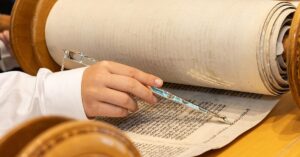
My work has included writing new Torah scrolls, mezuzot, and tefillin, as well as examining existing sacred texts. I have also had the opportunity to restore ancient Torah scrolls in different parts of the world. Every scroll has its own history, and every restoration requires careful attention. Some pieces have been preserved for generations, and being trusted with their restoration is an experience I value tremendously.
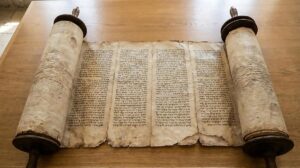
There is something very humbling about holding a Torah scroll that has survived for many years. I often think about the people who held it before me and the communities that gathered around it. A scroll can carry a history that cannot be captured in a simple book or photograph. Preserving it allows that history to remain part of the present.
The Beauty of Ancient Hebrew Calligraphy
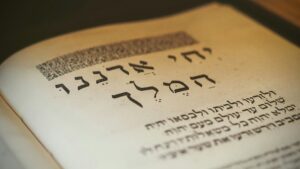
Ancient Hebrew calligraphy has been another important part of my life. I have always appreciated the beauty of Hebrew letters and the discipline required to create them properly. Each letter has its own character and form, and the process of putting those letters together requires concentration and care.
My interest in calligraphy naturally became connected to my work as an artist. I have created Judaica artwork using Hebrew calligraphy as well as oil paintings on canvas and parchment. Art has given me another way to explore Jewish history and ideas. While a Torah scroll has a very specific purpose and tradition behind its creation, artwork can provide a different opportunity for people to connect with Jewish culture.
I enjoy the fact that these two parts of my life can exist together. The scribe in me is focused on tradition, precision, and responsibility. The artist in me is interested in expression, beauty, and creativity. Both require patience, and both require a willingness to spend time getting the details right.
Traveling to Preserve History
My work has taken me around the world, particularly when I have been involved in restoring ancient Torah scrolls and working with Jewish communities. Traveling for this purpose has given me the opportunity to see how Jewish traditions are maintained in different places. Although communities may have different customs and histories, there is often a shared appreciation for preserving what came before.
I have learned something from every place I have visited. Sometimes the most valuable lesson comes from the scroll itself. Other times, it comes from the people who have cared for it and kept it within their community. Their stories remind me that preservation is not only about repairing an object. It is about respecting the people and history connected to it.
That is why I believe this work matters. A restored Torah scroll can continue to be used. A piece of Hebrew calligraphy can introduce someone to an ancient artistic tradition. A lesson can give a student knowledge that they carry with them for the rest of their life. These things may seem different, but they are all forms of preservation.
Sharing What I Have Learned
Teaching has always been an important part of my life because knowledge becomes more meaningful when it is shared. I believe that if I have learned something through my education, my work, or my experiences, I should make an effort to pass that knowledge along to others.
This applies to religious studies, Jewish philosophy, calligraphy, scribal traditions, and the importance of doing meaningful work. I want people to understand that preserving tradition does not mean simply looking backward. It means giving future generations an opportunity to understand where they came from and decide what they can carry forward.
I also believe that teaching should encourage people to do good. Knowledge has value, but how we use that knowledge matters just as much. If something I have learned can help another person, I consider it worthwhile to share.
Looking Toward the Future
Preserving Jewish heritage is a responsibility that I am grateful to have. My work as a scribe and artist has allowed me to combine education, craftsmanship, creativity, and faith in a way that feels meaningful to me. Whether I am restoring an ancient Torah scroll, working on Hebrew calligraphy, creating artwork, or teaching someone what I have learned, I see each activity as part of something larger.
Tradition survives because people choose to care about it. It survives because someone takes the time to learn, someone takes the time to teach, and someone takes the time to preserve what has been handed down. I hope that my work can contribute to that process.
For me, preserving Jewish heritage is ultimately about connection. It connects the past with the present and gives the future something meaningful to build upon. That is why I continue to learn, create, teach, and work with the traditions that have been such an important part of my life.